
The First Weapons
What were the first weapons? How did we make them—and why did they change everything?
How humans made the first weapons
Before metallurgy, before bows and swords, early humans crafted the first weapons from what they had at hand: wood, bone, and stone. These tools weren’t just for defense—they were for hunting, and they changed how our ancestors fed themselves, lived, and expanded across the globe. These are three of the earliest known weapons:
1. Wooden Spears
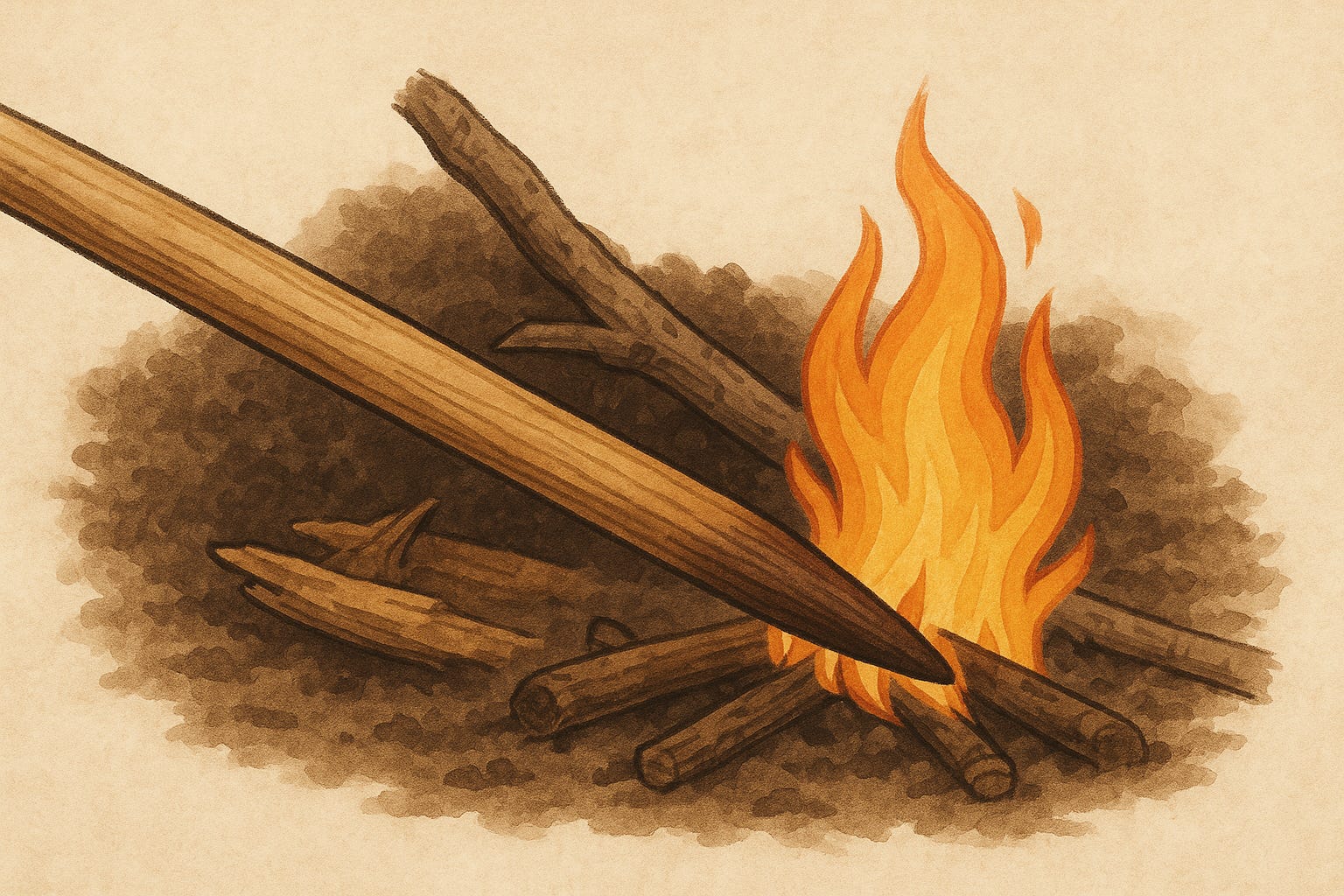
Made from carefully shaped hardwood (usually spruce or pine), these spears were straightened by fire and sometimes had a pointed end hardened in flames.
How they were made: A long, straight branch was trimmed, stripped of bark, sharpened at one end using rocks, then fire-hardened—briefly exposed to flame and then cooled to toughen the tip.
2. Bone Weapons
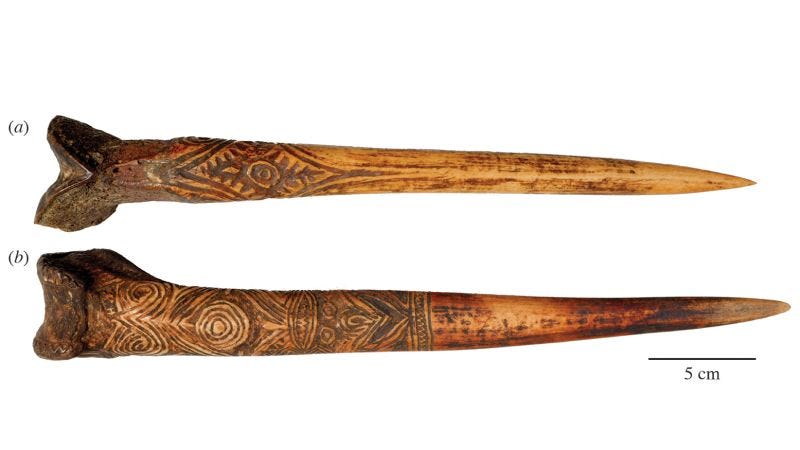
Bones—especially those from large animals—were shaped into sharp tools and weapons. These included daggers, clubs, and sometimes harpoons.
How they were made: Hunters selected long, strong bones (like femurs), broke them into shards, and ground or flaked them into shape using stones.
3. The Spearthrower (Atlatl)
Invented at least 20,000–30,000 years ago, the spearthrower is a mechanical lever used to throw a spear (or dart) with much greater speed and force than by hand alone.
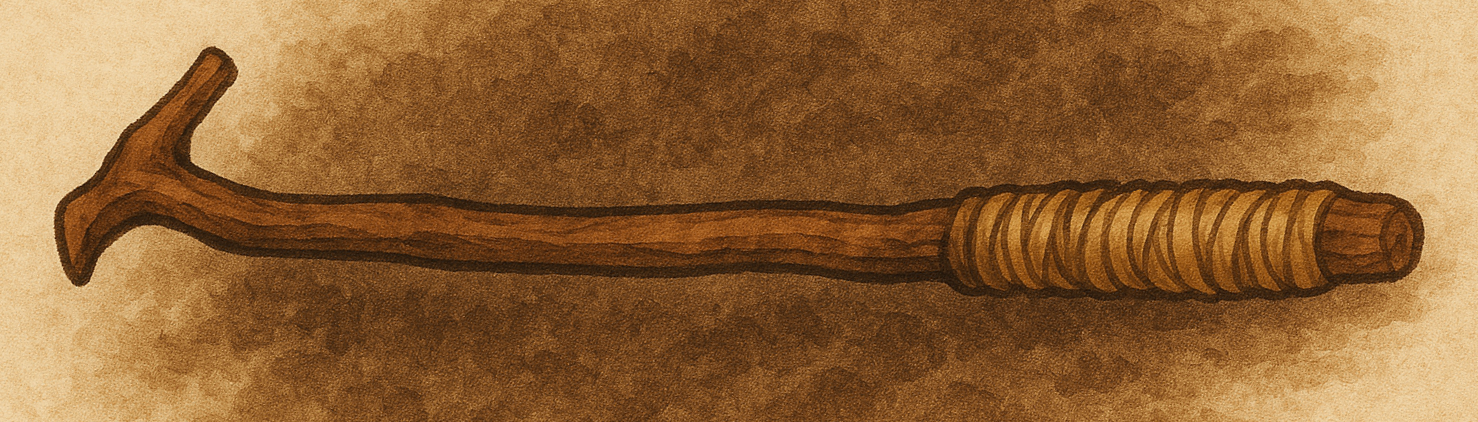
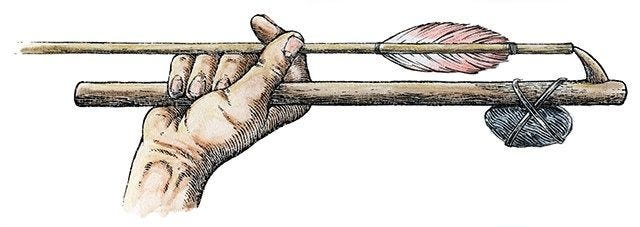
How it was made: A long piece of wood or antler with a hook or notch at one end was carved to match the length and balance of specific darts. Some even had decorative carvings or weights.
How it was used: The hunter placed the butt of the dart into the notch, held the shaft, and launched it in a throwing motion. The spearthrower acts like an extension of the arm—boosting speed, distance, and power.
Why it mattered: This device revolutionized hunting, allowing humans to strike from farther away and more safely. It likely helped in the pursuit of fast or dangerous game and marked an early form of projectile technology.
Historic value
The creation of early weapons wasn’t just about survival—it reshaped everything.
With spears, clubs, and throwing tools, early humans became more efficient hunters. This meant more protein, more calories, and more secure communities. Hunting became safer, more collaborative, and required planning, communication, and cooperation—skills that fed into language, culture, and social bonds.
These weapons also influenced demographics and migration. Groups that could hunt better could support larger populations. They could move into harsher environments—cold plains, forests, or open tundras—because they had the means to take down large game and defend themselves. This helped Homo sapiens spread across continents.
Weapons also introduced competition. As some groups developed better tools, they gained advantages over others. Conflict, defense, and territorial boundaries began to shape early human interactions—laying foundations for warfare, alliances, and leadership.
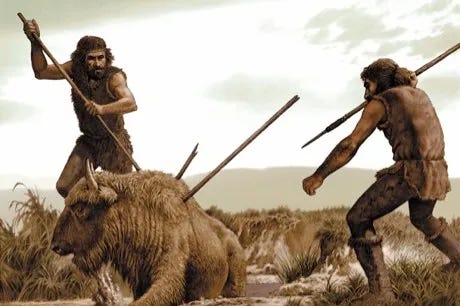
The first weapons were more than tools. They were turning points in the human story: extending our reach, empowering our tribes, and unlocking the next steps in culture and civilization.
References
[1] https://www.worldhistory.org/collection/279/a-gallery-of-prehistoric-and-ancient-weapons/
[2] Thieme, H. (1997). “Lower Palaeolithic Hunting Spears from Germany.” Nature, 385, 807–810.
[3] https://edition.cnn.com/2018/05/05/health/new-guinea-human-bone-dagger/index.html