
Fire
How did we make fire? When did it happen for the first time?
How to make fire
One of the ways our ancestors created fire was by rubbing a stick of hard wood against a piece of softer wood. The friction would generate heat—enough, eventually, to ignite dry tinder and start a fire.
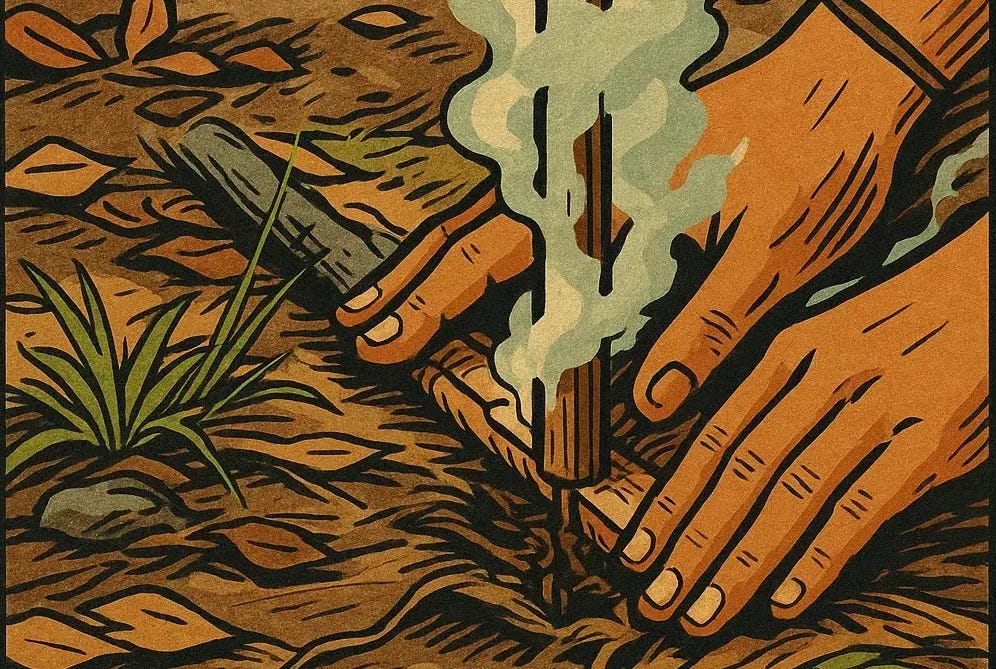
To try this yourself, you’ll need:
A hard wood stick
A soft wood plank
Some very dry tinder (like straw, dry grass, or bark shavings)
Here’s how to do it:
Place the soft wood plank on the ground and carve a small groove or notch on one side.
Position your tinder near the groove.
Place the hard wood stick vertically over the groove, perpendicular to the plank.
Rotate the stick rapidly between your hands while pressing downward. Keep going—friction is key.
When you see smoke, gently blow on the tinder to feed it oxygen and help the fire catch.
We recommend watching a few video tutorials as well—it can make the process much easier to understand and replicate.
Historic value
Fire is one of the most transformative technologies in human history. In the earliest days of humanity, it was used opportunistically—borrowed from natural sources like lightning strikes or wildfires. Evidence suggests that Homo erectus may have first learned to control fire nearly 1.5 million years ago in East Africa.
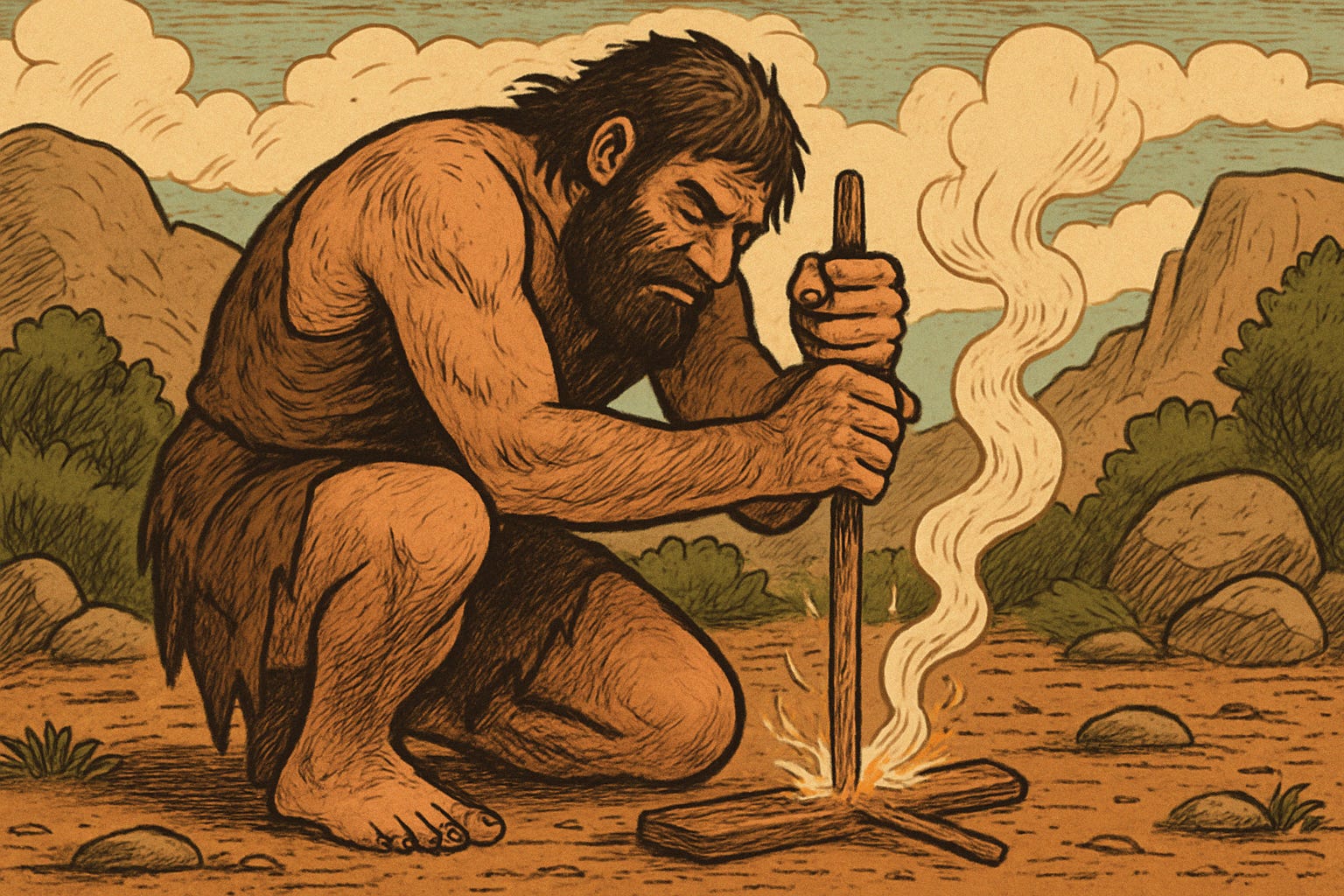
But using fire and making fire are two very different things. Our ancestors didn’t start creating fire on their own until much later, around 400,000 years ago, during the Middle Paleolithic.
Fire was key not just for survival, but for thriving. It provided warmth in cold climates, protection from predators at night, and allowed people to cook food, making it easier to chew, easier to digest, and safer to eat. That meant more energy and fewer illnesses. Firelight also stretched the day past sunset, creating space for socializing, bonding, and maybe even storytelling.
Impact on technology
And like every major step we’ll cover in this blog, fire unlocked the next ones. It helped harden wooden tools, process plant fibers, and eventually made possible things like charcoal, ceramics or metalworking, which we will be covering in the future. In many ways, learning to make fire wasn’t just a breakthrough—it was a spark that set everything else in motion.
References
[1] https://royalsocietypublishing.org/doi/10.1098/rstb.2015.0164