
Lost-wax casting
How did we cast any metal shape? When did it happen for the first time?
Historic value
We entered the metal age thanks to metal smelting, where new tools and weapons changed the way we lived and greatly improved our productivity. But how did we actually shaped these tools? How did make small and detailed ornaments out of metal?
That’s were the process of lost-wax casting came to help us. The oldest example of this method was found in Varna, Bulgaria, around 4,550 BCE2, made by, as far as we now today, the earliest known fine metalworkers.
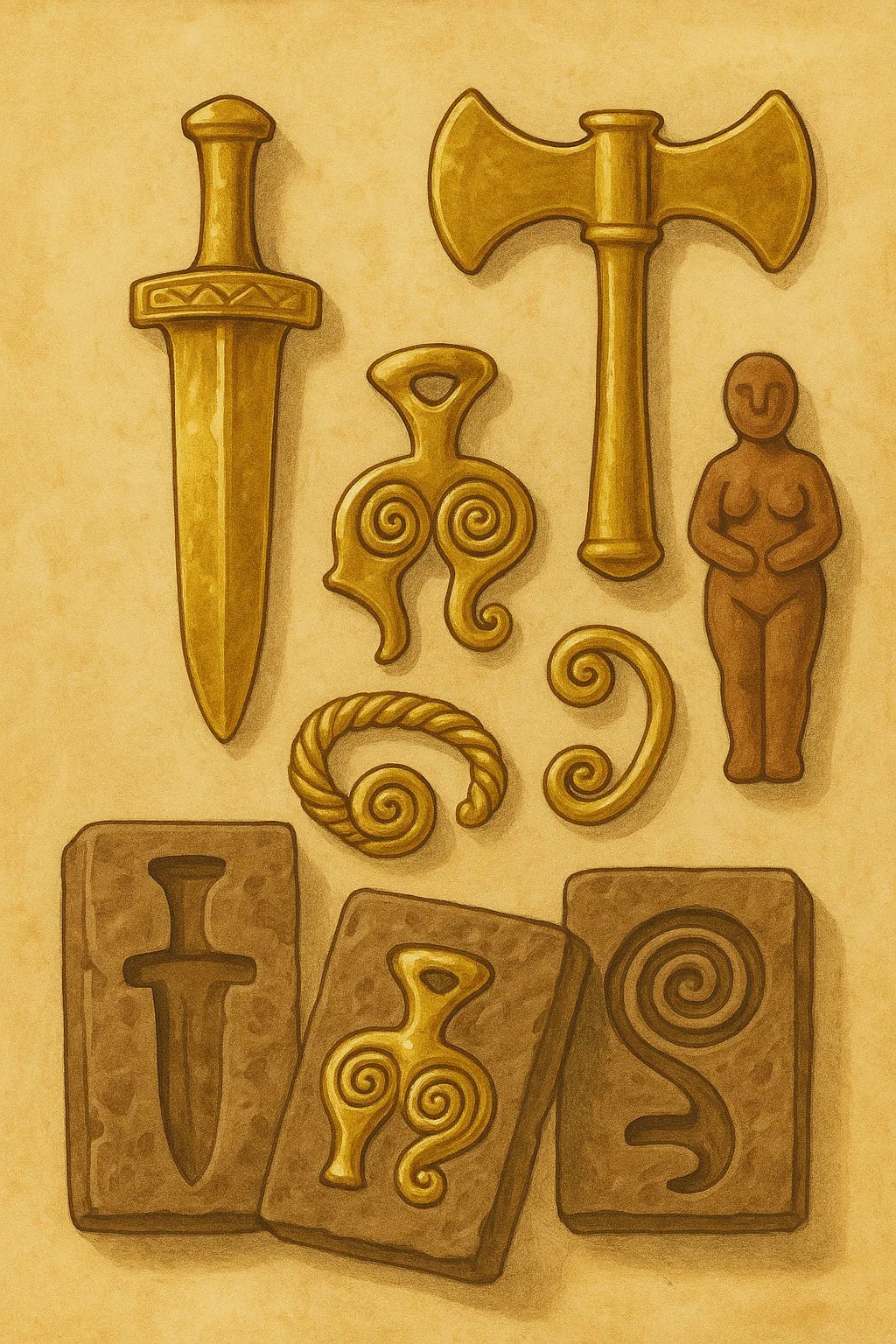
Thanks to this technique we could produce:
Much more intricate shapes, like tools or weapons
Replicate one shape to make multiple copies
Detailed ornaments
Hollow metal vessels
Figurines, statues, and ceremonial artifacts
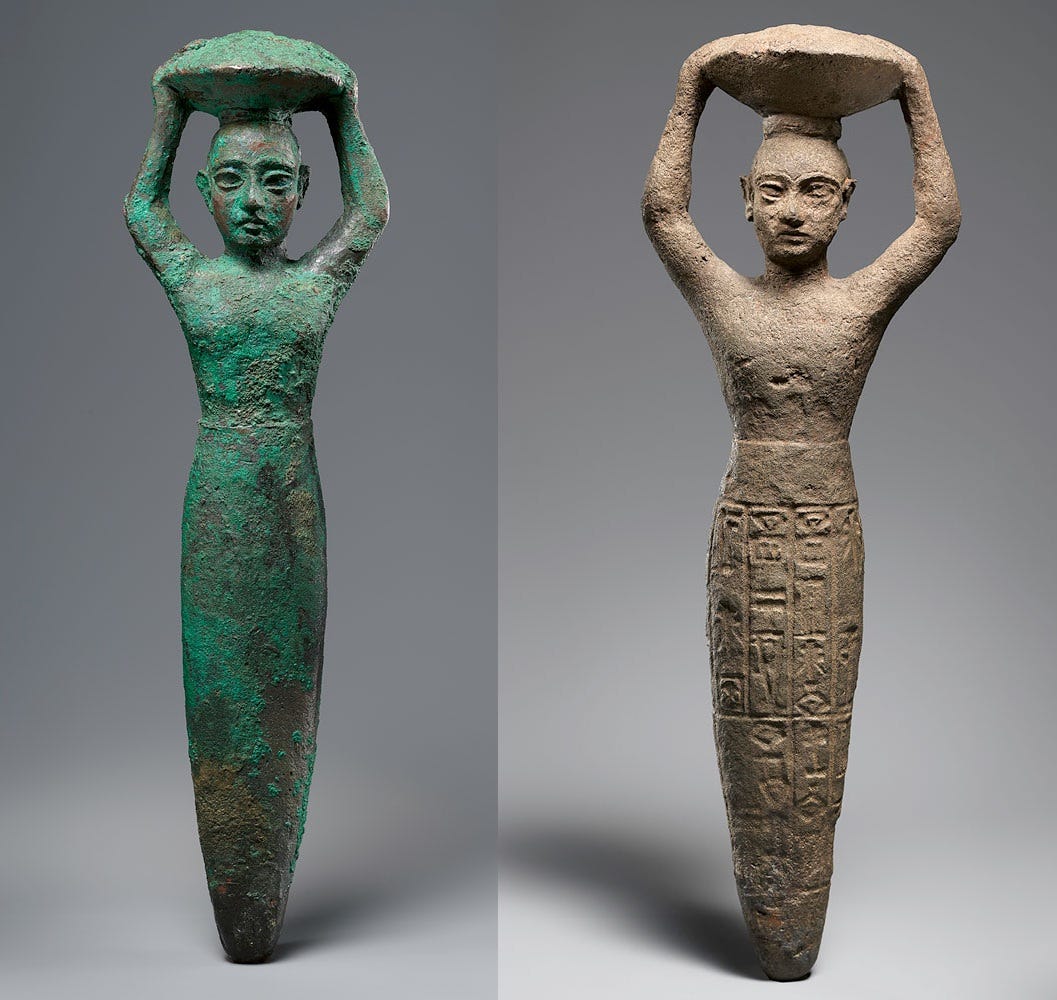
Some of the most iconic ancient bronze sculptures, from early Mesopotamian figurines to the famous Chinese Shang ritual vessels, were made using this method.
How to cast metal using wax
The exact method of how this technique was first made are not documented, but this is how they most likely did it:
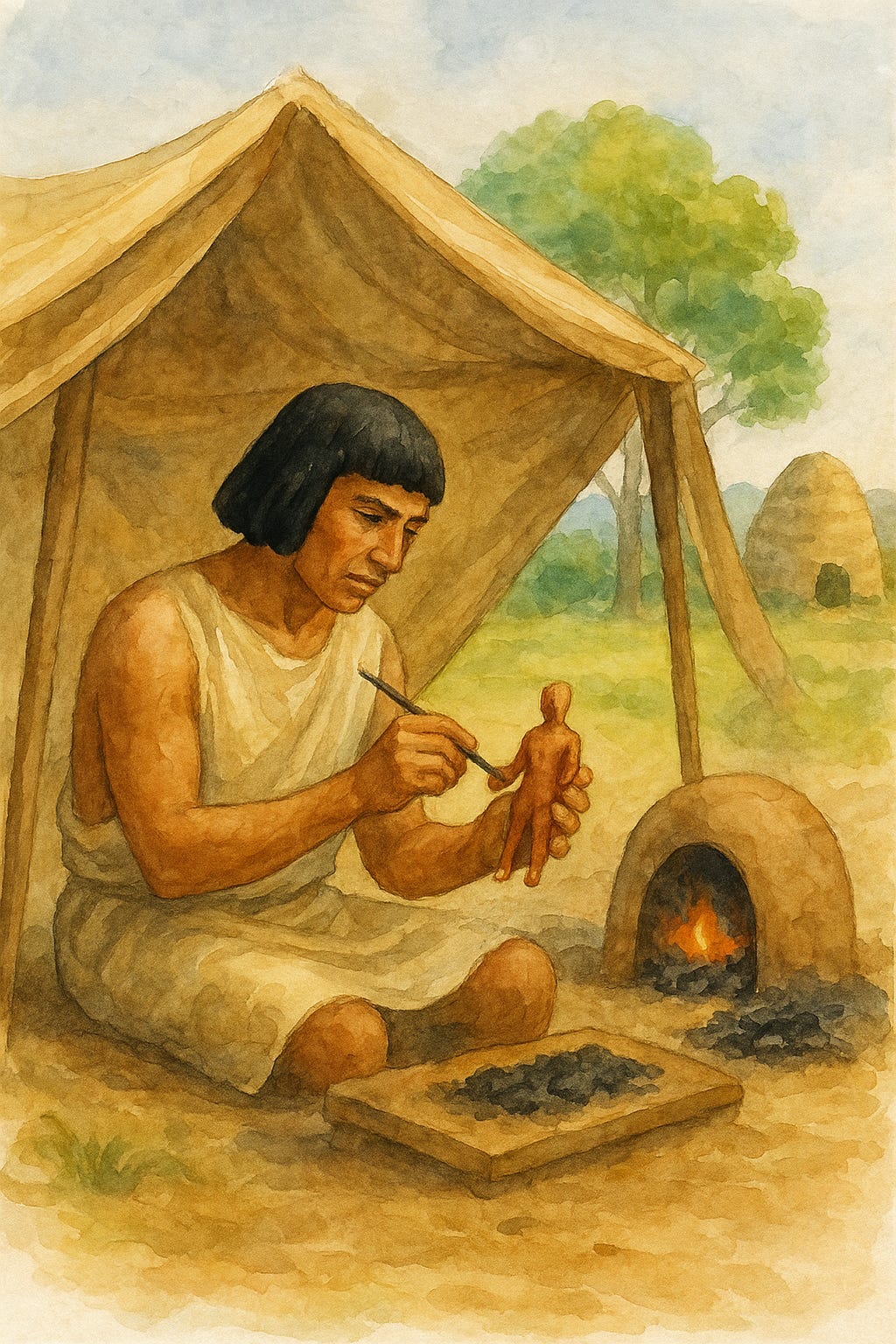
Shape the wax: Create your object out of beeswax. Wax is easy to shape with fingers or tools, allowing fine details. Its softness is what makes this technique so powerful.
Add wax channels: Attach thin wax rods to the sculpture. These form:
A sprue, the main channel where metal will enter
Vents, which let air escape. Without these, molten metal cannot fill the mold completely.
Cover the wax in clay: Coat the entire wax model in fine clay. After the first thin layer dries, add more layers until the mold is thick enough to withstand heat. Some cultures mixed clay with ash, sand, or broken pottery to strengthen the mold.
Let the mold dry: Dry the mold slowly to prevent cracks. You can leave it to dry in the shade or near a warm fire.
Melt the wax out: Place the mold near a fire. As it heats, the wax inside melts and drains out through the sprue hole, leaving a hollow cavity in the clay. This is where the name “lost-wax” comes from.
Heat the mold: Before pouring the metal inside the clay mold, it must be preheated. This prevents thermal shock and helps the metal flow properly.
Melt the metal: Ancient casters used bronze, copper, gold, or silver.
Pour the metal: Pour the molten metal into the mold through the main channel. It should flow into the cavity and take the shape of the original wax sculpture.
Break the mold: Once cooled, the clay mold is broken open to reveal the cast metal object. Every mold is destroyed during the process, meaning each piece is unique.
Finish the piece: Remove sprues and vents, then file, polish, or engrave the surface.
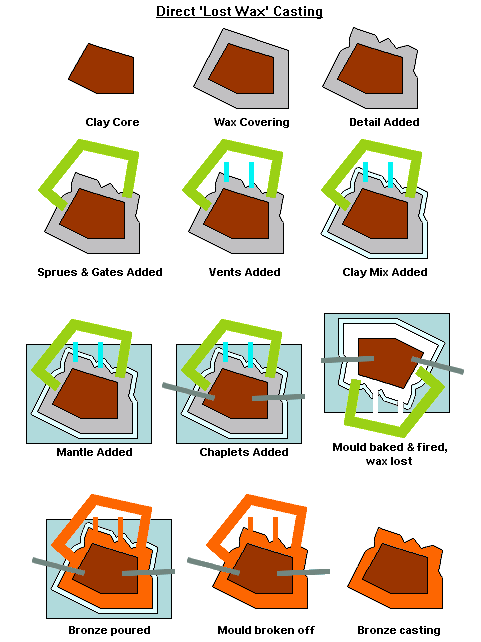
Depending on the figure, an extra step is available to reduce the amount of metal needed for a figure. Instead of making a solid figure, made 100% of metal, you can make the core of the figure out of clay and the metal will cover it. This greatly reduces the amount of metal needed and also its weight.
📺 Watch this video to see exacly how the technique works:
How to make a lost-wax casting sculpture6
Impact on technology
The main impact this technique had was in metallurgy. Seeing that we could create very complex tools, any size we want and with extreme durability, we tried to create new methods to work with metal, new naturally ocurring metals and even started mixing them to create new alloys.
These advancements and new materials required the ability to control higher temperatures and different behaviours of the materials under different conditions, pushing for huge improvements in furnaces and crucibles.
But not all advancements were technical, metal ornaments were also used to show status and power, and were widely used as religious symbols all across the world. Given the raw value of metal, we started to use it as money (a future post about this topic soon, subscribe and don’t miss it!), stamping small metal figures.
References
[1] https://pmc.ncbi.nlm.nih.gov/articles/PMC5116070/
[3] Muhly, J.D. “The Beginnings of Metallurgy in the Old World”
[4] https://en.wikipedia.org/wiki/Lost-wax_casting
[5] Youtube video
[6] Youtube video