
From Wolf to Dog: Humanity’s First Domesticated Companion
How did we first work together with wolves? When did it happen for the first time?
How to live with wolves
The very first animal we domesticated was not a cow, a sheep, or a goat, but the wolf. This happened tens of thousands of years before farming, long before livestock became part of our daily lives. Humans were still hunter-gatherers when we first shared our lives with these animals, and the relationship was born out of necessity, curiosity, and a bit of mutual advantage.
The most likely process began when wolves, curious and opportunistic, came closer to human camps to scavenge on leftover food. The bolder but less aggressive wolves benefited from this arrangement, they gained easier meals without having to risk a hunt. Humans, in return, began to see the advantage of having these animals around. Wolves had sharp senses, could warn us of danger, and could even help in hunting.

Over time, a win-win relationship developed. Humans tolerated and even encouraged certain wolves near their camps, and the friendlier wolves adapted to living alongside us. Over generations, this selective closeness turned into domestication, and those wolves became dogs. Unlike livestock domestication, which was about food and material resources, dog domestication was about partnership.
Historic value
The domestication of the wolf, which gradually gave rise to the dog, is one of the most significant milestones in human history. Archaeological evidence suggests this bond began at least 15,000 years ago, possibly even earlier. It represents the very first time humans altered the evolutionary path of another species, and in turn, that species altered ours.
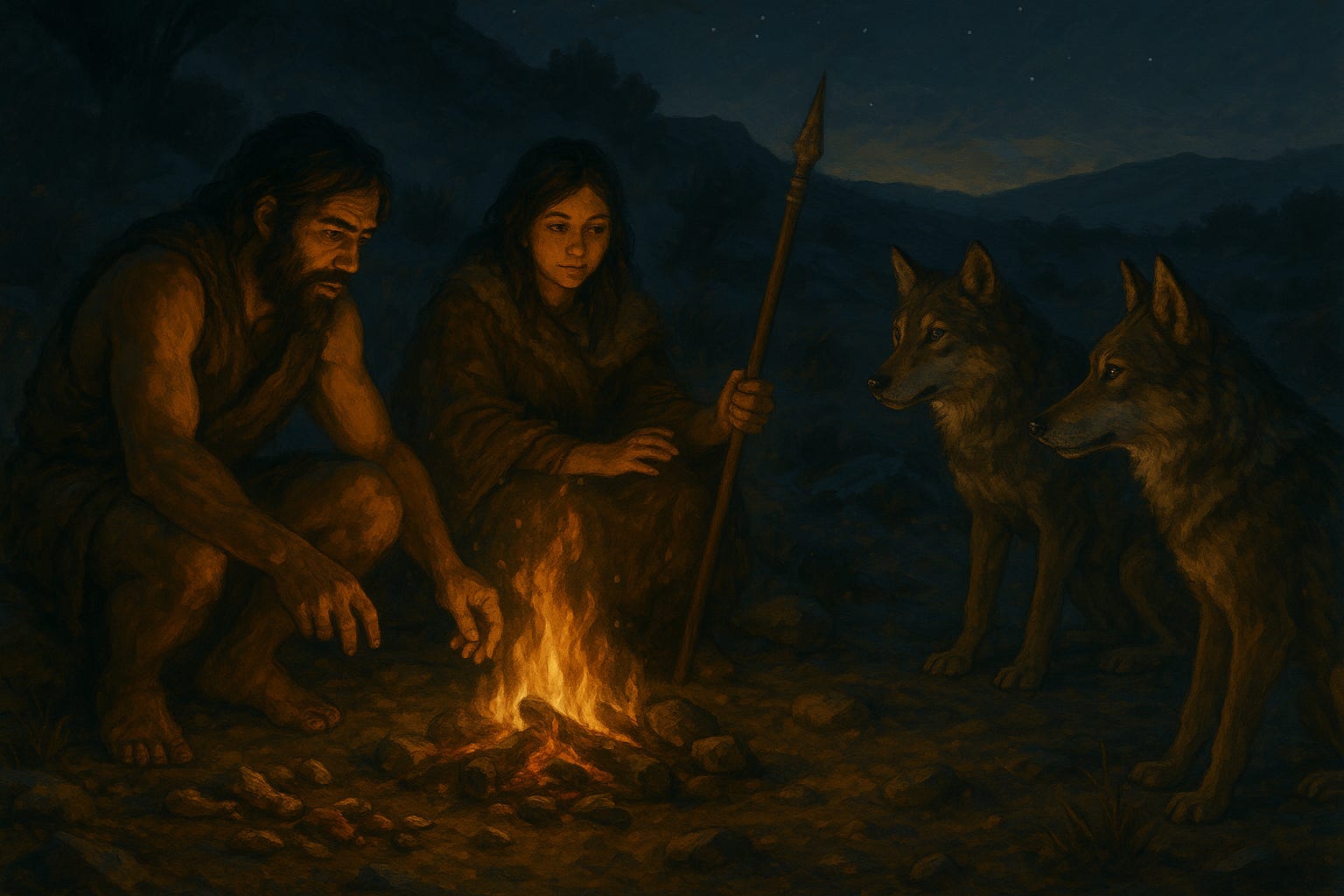
Dogs were not just tools or resources, they were companions, protectors, and partners in survival. They helped early humans hunt, guarded camps against predators and strangers, and likely played a role in reducing stress and providing comfort, a role that persists today.
This historic step also set the stage for what would later become a broader practice: domesticating animals not just for companionship, but for food, clothing, labor, and transport. Livestock domestication would come later, but the dog taught us that humans and animals could share a life in mutually beneficial ways.
Impact on technology
At first glance, the domestication of the dog might not seem like “technology”. But technology is not just tools and machines, it is also systems and relationships that improve survival and quality of life. Domesticating the wolf was a technological innovation in social engineering and ecological management.
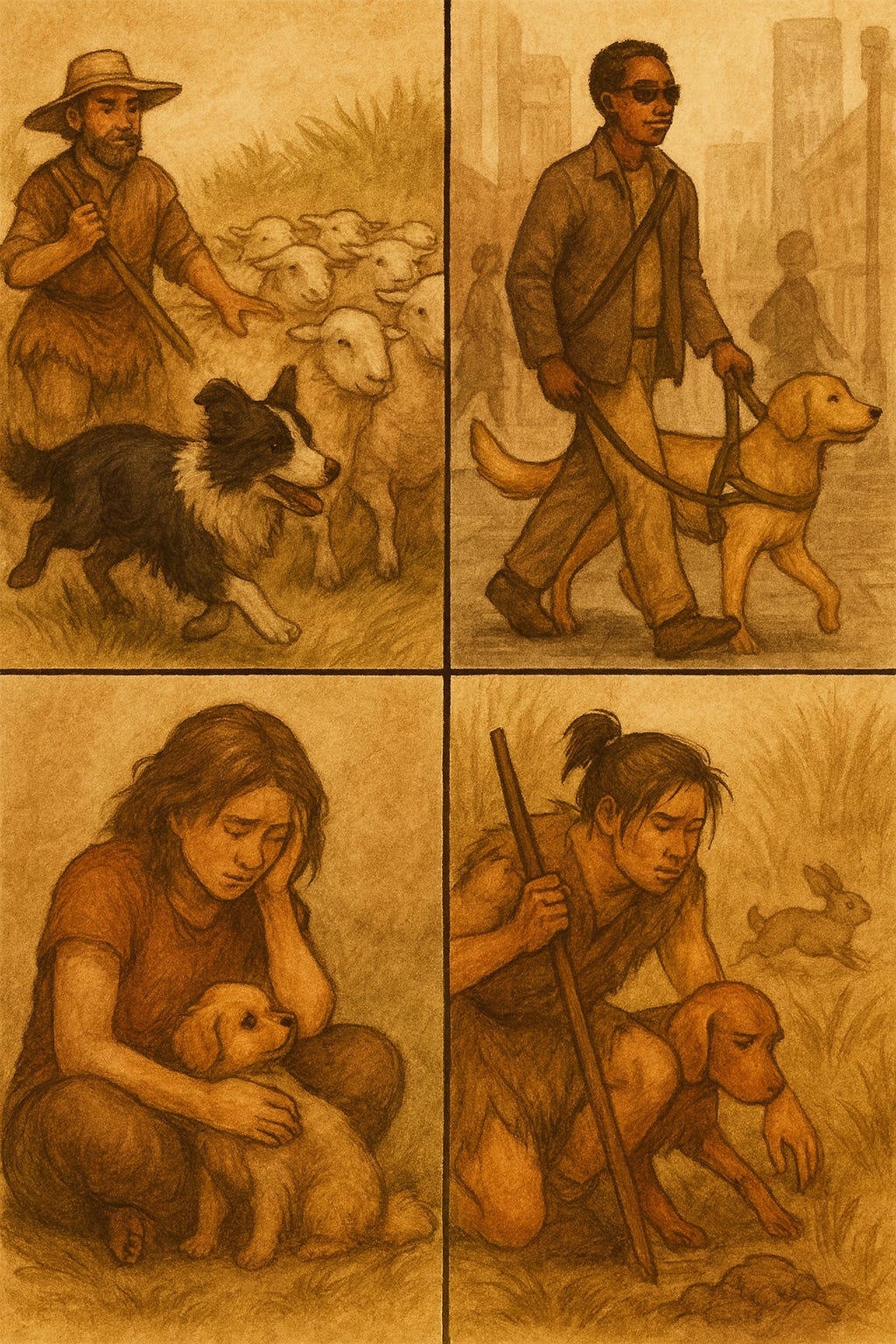
Dogs extended human senses (with their keen smell and hearing), improved hunting efficiency, and increased safety. They also changed how humans thought about animals and about themselves. They showed that cooperation with another species could become part of the human toolkit, just as important as stone blades or fire.
This lesson would echo through history. The success of the dog paved the way for livestock domestication, which transformed human societies with agriculture, permanent settlements, and surplus food production. In that sense, the dog was not just humanity’s first domesticated animal, it was the prototype for a revolutionary idea: that by working with other species, we could change the world.
References
[1] https://en.wikipedia.org/wiki/Domestication_of_the_dog
loved the post ❤️🐕