
Bricks
How did we make bricks? When did it happen for the first time?
Around 9.000 BCE, we started using mud bricks to build structures. These bricks were made by mixing earth with straw and water, shaping them in wooden molds, and leaving them to dry in the sun. Compared with other construction techniques of the time, such as adobe (free-formed mud walls) or cob (lumps of wet earth and straw piled together), mud bricks provided a stronger, more uniform, and reusable building unit. They allowed people to build larger, straighter, and more stable walls with less labor.
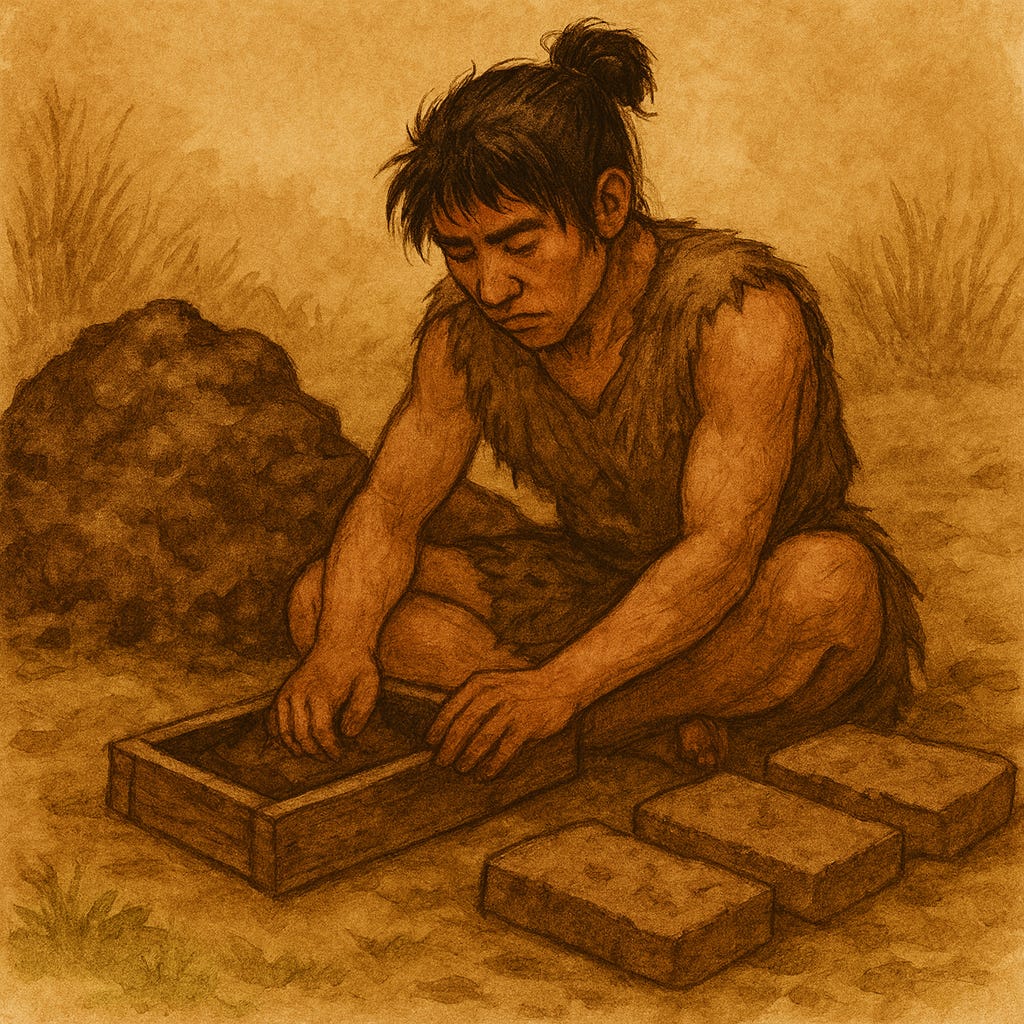
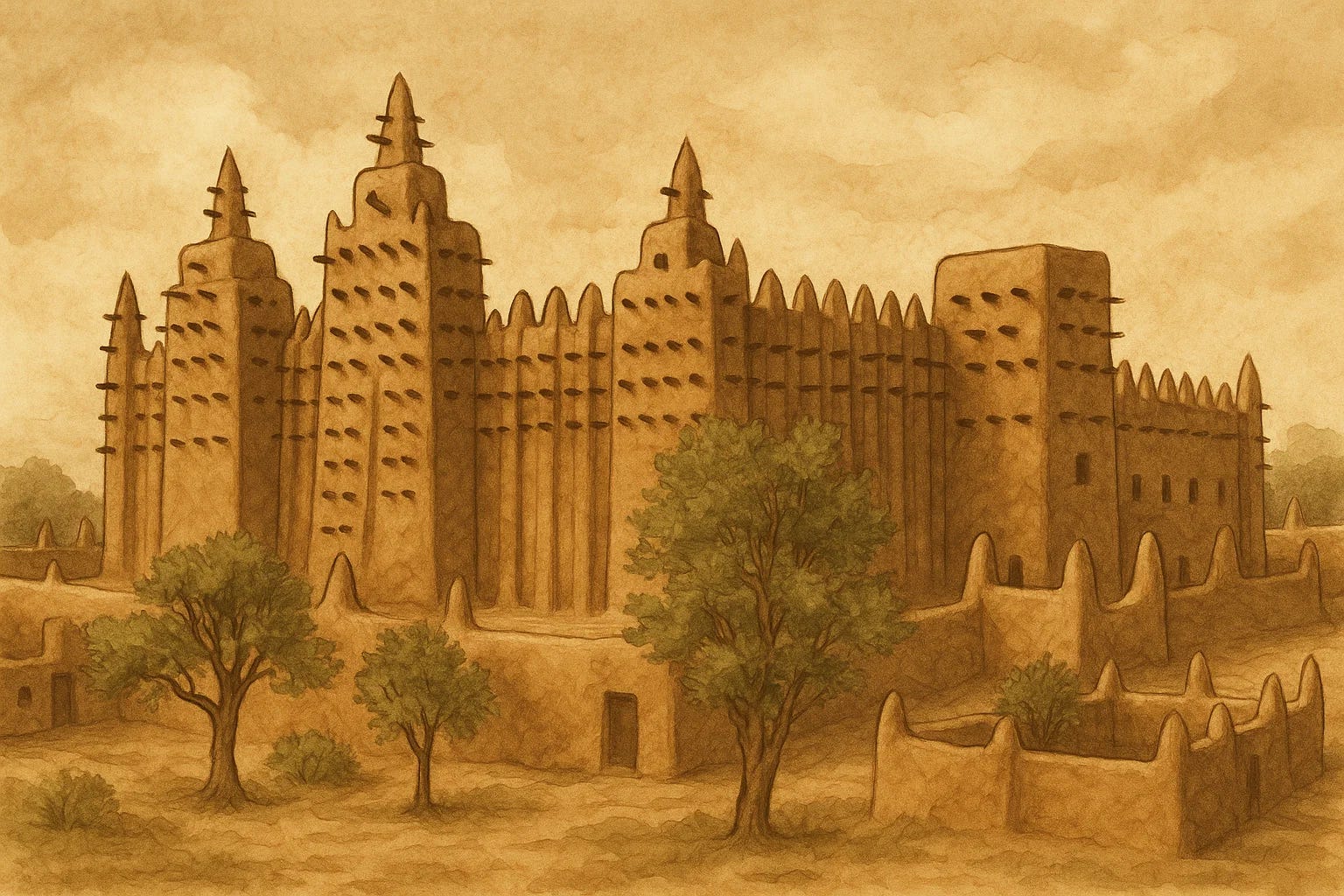
The oldest known mud bricks were found at Jericho and Çayönü, dating back around 9.000 BCE. The oldest mud brick structure still standing today is the Great Mosque of Djenné in Mali, originally built in the 13th century and reconstructed several times since. It remains a UNESCO World Heritage site and an outstanding example of the durability of sun-dried bricks.
After a few thousand years, around 4.500 BCE, fired bricks appeared in Mesopotamia and the Indus Valley. By baking clay in kilns, people created bricks that were stronger, waterproof, and far more durable. This improvement meant that cities could be built with multistory houses, public baths, and defensive walls resistant to both rain and time. Fired bricks are still used nowadays as one of the main materials in modern construction.
How to make mud bricks
We put in the same post mud bricks and fired bricks because, although their invention happened thousands of years apart, they are essentially the same idea with a critical improvement: the use of fire.
🧱 Steps to make a mud brick (9.000 BCE technology):
Collect earth rich in clay.
Mix it with water and straw to increase strength and reduce cracking.
Pour the mixture into a rectangular wooden mold.
Remove the mold and leave the bricks to dry in the sun for several days.
Use the bricks once hardened to build walls or houses.
🔥🧱 Steps to make a fired brick (4.000 BCE technology):
Prepare a clay mixture, sometimes refined and sieved to remove impurities.
Shape the bricks in wooden molds, just as with mud bricks.
Let the bricks dry in the sun until firm.
Stack them inside a kiln (a pit or domed oven made of clay and stone).
Fire the kiln with wood or charcoal until the bricks reach high temperatures, baking them hard.
Remove, cool, and reuse the bricks for stronger and longer-lasting structures.
Take a look at this video from Primitive Technology where he creates bricks from scratch:
Impact on technology
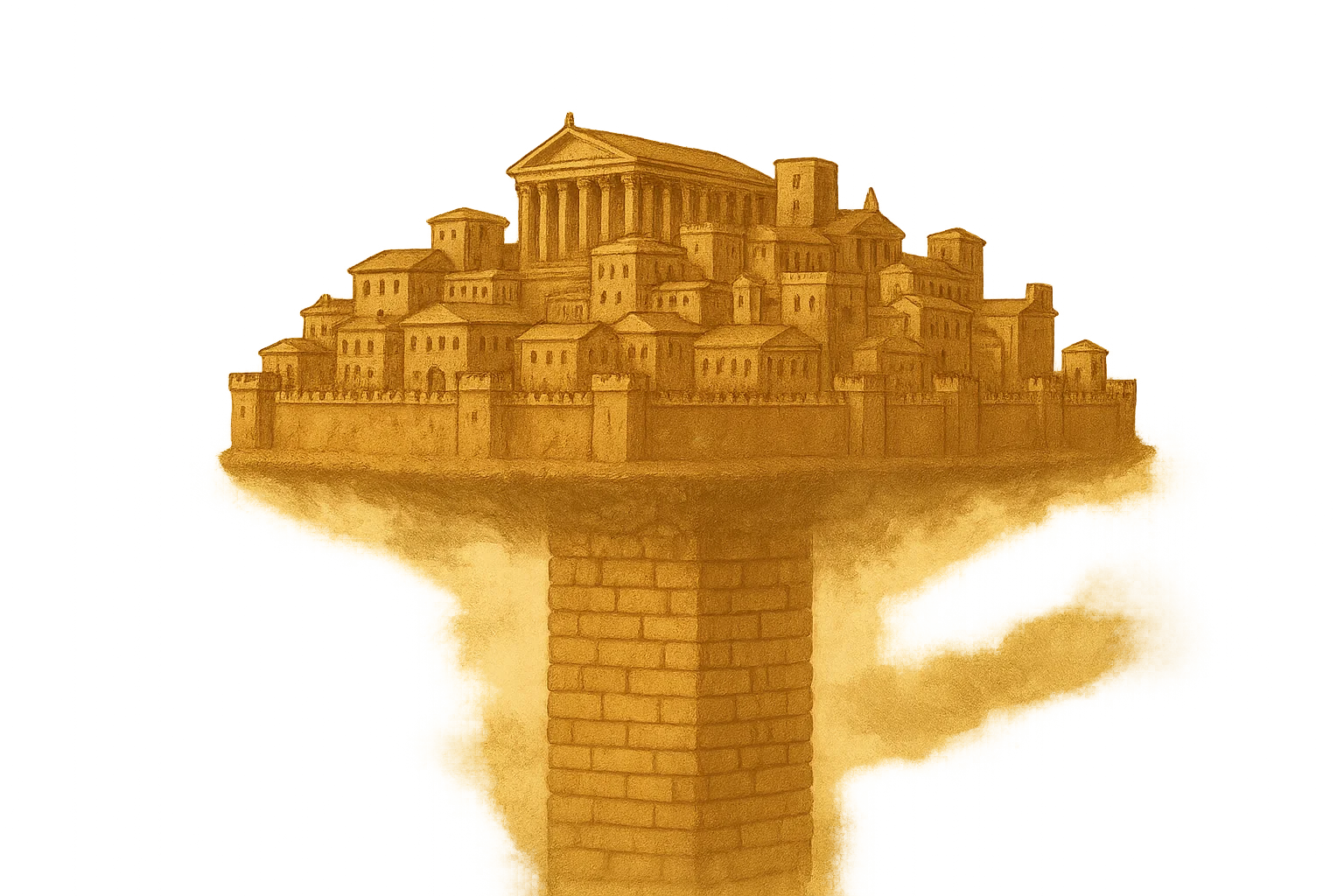
Bricks allowed humans to build larger, stronger, and more permanent homes than ever before. With fired bricks, entire cities became possible, complete with drainage systems, public buildings, and protective walls. This building innovation unlocked technologies such as kilns for ceramics and metallurgy, more advanced urban planning, and ultimately the ability to construct monumental architecture that could last for millennia.
References
[1] https://en.wikipedia.org/wiki/Mudbrick
[2] https://www.themodernantiquarian.com/site/10854/knossos#fieldnotes
[3] https://pmc.ncbi.nlm.nih.gov/articles/PMC6975557/
[4] https://en.wikipedia.org/wiki/Adobe
[5] https://eartharchitecture.org/?p=1071